
Updated: Aug 16
Anger: What’s Really Happening Under the Surface
Anger is a normal human emotion.Everyone feels it.
But sometimes anger becomes bigger than we expect. When that happens, it can affect our health, our relationships, and even how we feel about ourselves.
Learning where anger comes from is one of the most powerful steps toward emotional wellbeing.
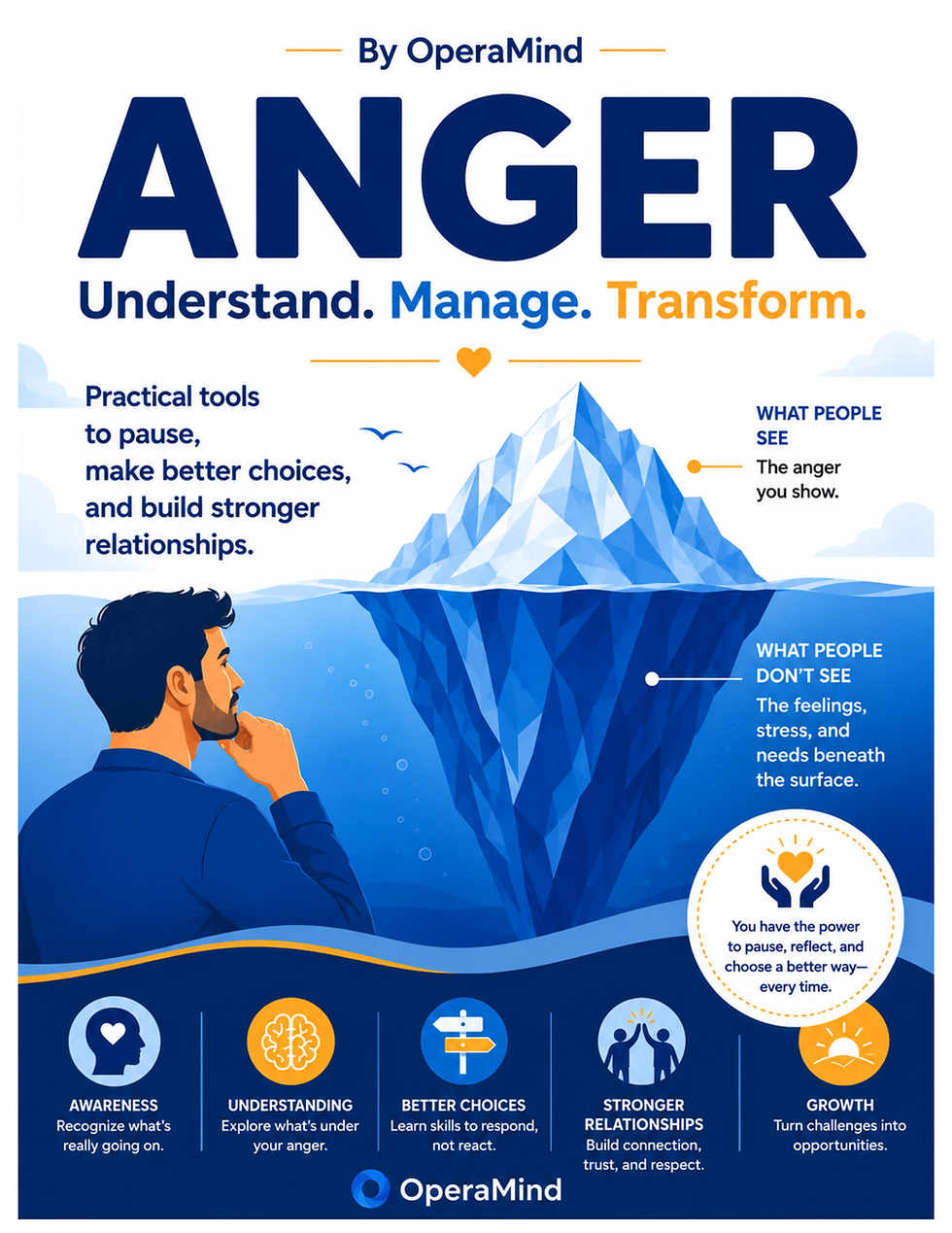
The Iceberg Example
Think of anger like an iceberg.
What people see above the water might be yelling, arguing, slamming a door, or wanting to throw something.
But below the surface, there are often deeper feelings:
hurt
stress
fear
embarrassment
exhaustion
old wounds
When we understand what is underneath, we can respond with clarity instead of reacting in ways we later regret.
Why Anger Can Make Life Harder
In the moment, anger can feel powerful. It can even feel justified.
But anger often leaves consequences behind.
For example:
we say things we wish we could take back
we hurt people we love
we feel guilty later
our body becomes tense
sleep becomes harder
Sometimes anger grows simply because we are tired, hungry, overwhelmed, or feeling disrespected.
When life already feels heavy, even small problems can feel huge.
The Real Cost of Anger
Anger can give short-term relief, like releasing pressure from a shaken soda can.
But afterward, we may have a mess to clean up.
Trust can break.Relationships can suffer.Peace can disappear.
When people compare the quick release with the long-term damage, many realize anger is not giving them the life they truly want.
Pause and Ask One Powerful Question
Before reacting, try asking:
“Is this response helping me become the person I want to be?”
That small pause can create space to choose something better.
A calmer response often protects your peace instead of taking it away.
Anger Does Not Make You a Bad Person
Feeling angry means you are human.
Anger is a signal. It tells us something matters.
When we learn to listen carefully, anger can guide us toward understanding, boundaries, and healing.
Healthier Ways Forward
Growth may include:
noticing triggers
understanding the feelings underneath
learning calming skills
communicating needs
repairing relationships
giving yourself compassion
You do not have to eliminate anger. You can learn to handle it wisely.
See the Anger Iceberg in Action
The infographic below helps you visualize how strong reactions on the outside are often connected to deeper emotions underneath. It offers a clear path toward awareness, choice, and change.

OperaMind AI Refined — A carefully restored edition that preserves the original educational concepts while enhancing readability, accessibility, and visual design with thoughtful AI assistance.

Opera Mind Classic — The original human-made, hand-crafted version, created before the use of generative AI.
About this resource
The Anger Iceberg was developed by Opera Mind as a visual educational tool based on clinical observations and established concepts in emotional awareness. It is designed to help people explore feelings, stressors, and experiences that may exist beneath anger.
Supporting References
American Psychological Association. Control Anger Before It Controls You.
Carver, C. S., & Harmon-Jones, E. (2009). Anger is an approach-related affect: Evidence and implications. Psychological Bulletin, 135(2), 183–204.
The Gottman Institute. The Anger Iceberg.
Developed by: Marisol Ada, LCSW / Opera Mind
Last reviewed: August 2026
Copyright & Use Policy
All content on this website — including but not limited to infographics, action plans, written materials, and downloadable resources — is the intellectual property of Opera Mind and is protected under U.S. and international copyright laws.
You may not copy, reproduce, modify, upload, publish, transmit, or distribute any material from this site without explicit written permission from the author.
Sharing of content for educational or non-commercial purposes is allowed only if:
Full credit is given to Opera Mind
The content is not modified, and
A direct link to the original website is included.
Unauthorized use, reproduction, or distribution of any material from this website may result in legal action.


Comments