
- Marisol Vilugron
- 30 minutes ago
- 2 min read
When Food Feels Like Comfort
A Quiet Struggle Many People Carry
Emotional eating is something many people experience, often without talking about it. There are moments when food isn’t about hunger at all—it’s about stress, sadness, boredom, or feeling overwhelmed. In those moments, food can feel like a comfort blanket: warm, familiar, and easy to reach for.
Why It Helps… and Why It Doesn’t Last
Food can bring comfort for a moment. That part makes sense. But emotional eating is a little like trying to heal a heavy heart with a sandwich. The relief is short-lived, and soon the feelings come back—sometimes with guilt or frustration added on top.
A Gentle Pause Can Change Everything
One of the most powerful things you can do is pause and ask yourself:“What am I really needing right now?”
That single question can slow things down and help you step out of autopilot. There’s no judgment here—just curiosity and care.
Emotional Hunger Is Sneaky
Emotional hunger doesn’t always show up when life is hard. It can appear when you’re tired, lonely, bored, stressed, or even celebrating. Having simple routines—regular meals, drinking enough water, resting when you can—helps your body feel more balanced so emotions don’t take over your hunger signals.
Create Comfort That Goes Beyond Food
It can help to create a personal comfort menu—a list of gentle, non-food ways to care for yourself. Maybe it’s listening to music, stretching, taking a warm shower, stepping outside, or calling someone you trust. These options give your emotions something soft to lean on.
Be Kind to Yourself
This isn’t about willpower or being perfect. It’s about compassion.You’re allowed to feed your body with food—and feed your heart with care.
If this feels familiar, know this: you’re not broken. You’re human. And small, kind steps really do make a difference.
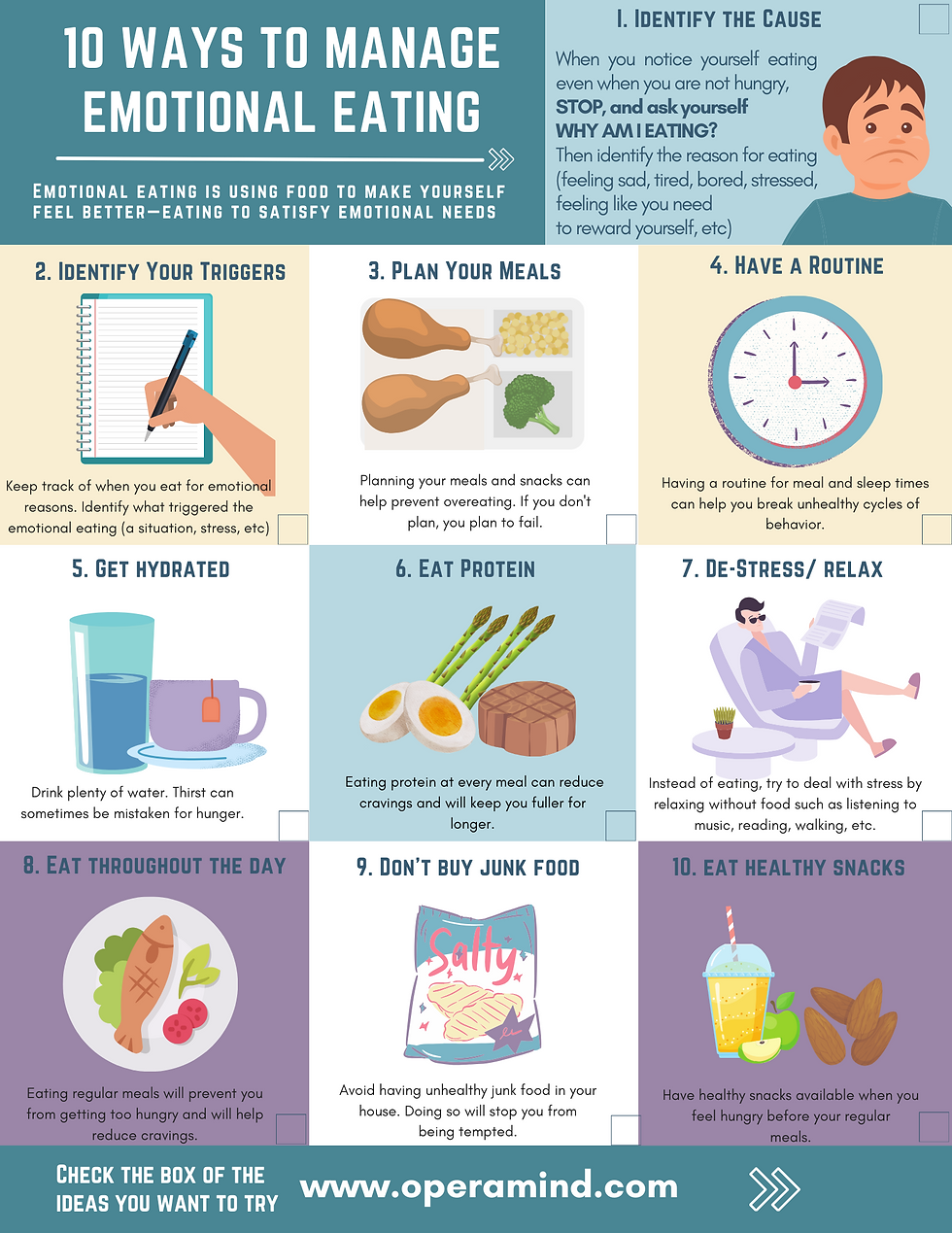
The infographic below shares 10 simple ideas to help manage emotional eating with more awareness and compassion. Take a look and choose one or two that feel doable right now.



Comments