

Eating While Navigating Depression
Depression does not only change how we feel emotionally. It can affect energy, motivation, appetite, and even the simple question:
“What should I eat?”
Some people forget to eat. Others eat for comfort during emotional storms.
Both are understandable.
Eating during depression is not about being perfect. It is about giving your body what it needs.
Food Is Fuel for the Brain
Think of your brain like a car.
Without gas, it cannot run well.
Food gives the brain nutrients that help with:
thinking
mood
focus
energy
A fed brain has a better chance to cope than a hungry one.
When Cooking Feels Like Too Much
Depression can drain strength.On some days, cooking may feel impossible.
And that is okay.
Easy foods are not “lazy.”They are smart and caring.
Examples:
frozen meals
pre-cut vegetables
rotisserie chicken
yogurt
oatmeal
smoothies
a sandwich
Imagine your future self saying,“Thank you for making this easier.”
Small Choices = Big Care
A meal in a crockpot while you rest.A salad that takes one minute. A bag of nuts so you don’t get too hungry.
These may seem small.
But they are acts of kindness toward your body.
Nourishment Supports Healing
Food alone does not cure depression. But it helps create the strength needed for recovery.
Simple meals are enough. Regular snacks are enough.
Every time you eat, you are practicing care.
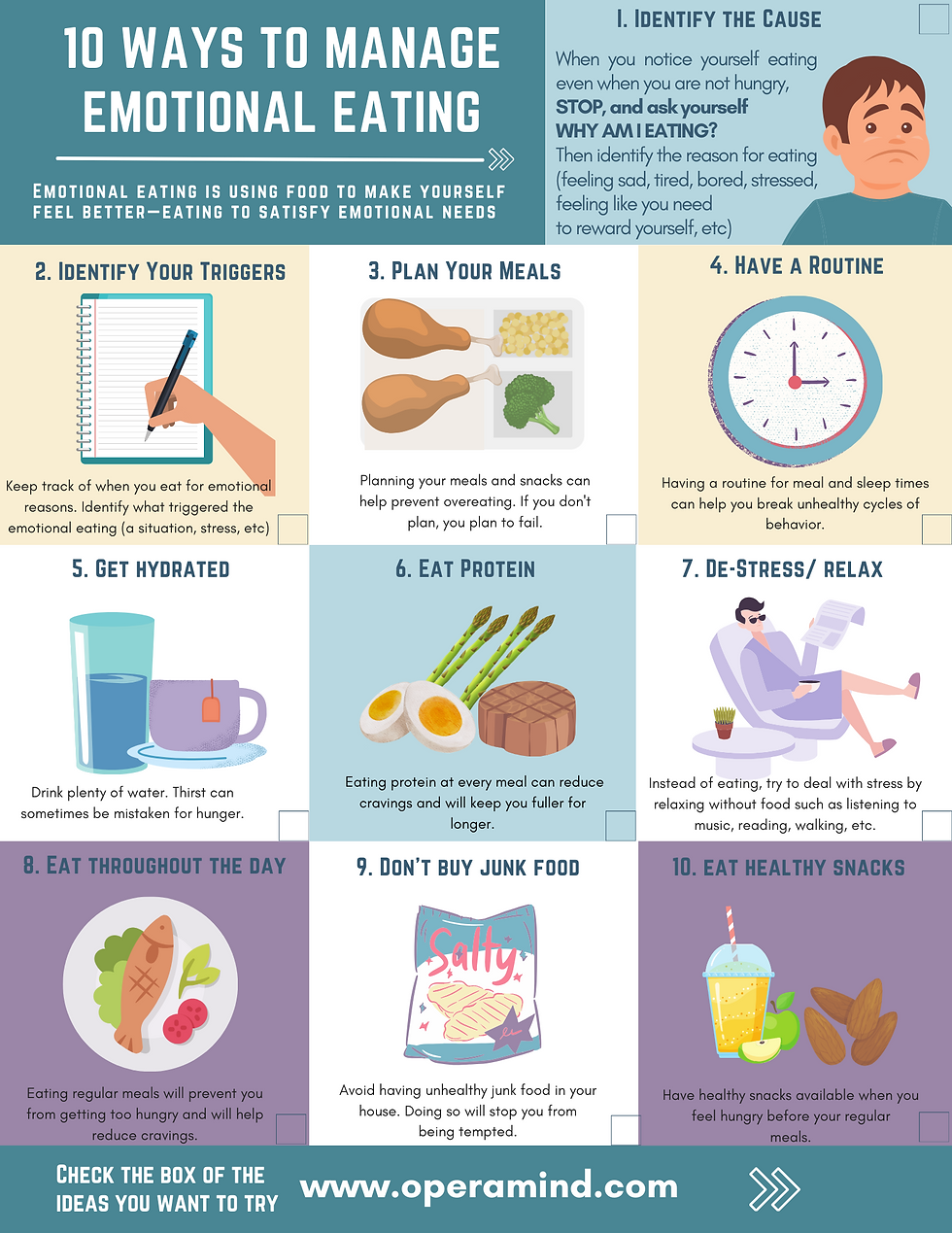
Take a look at the infographic below, created by the Opera Mind team, for a simple guide to eating while navigating depression.

OperaMind AI Refined — A carefully restored edition that preserves the original educational concepts while enhancing readability, accessibility, and visual design with thoughtful AI assistance.

Opera Mind Classic — The original human-made, hand-crafted version, created before the use of generative AI.
Copyright & Use Policy
All content on this website — including but not limited to infographics, action plans, written materials, and downloadable resources — is the intellectual property of Opera Mind and is protected under U.S. and international copyright laws.
You may not copy, reproduce, modify, upload, publish, transmit, or distribute any material from this site without explicit written permission from the author.
Sharing of content for educational or non-commercial purposes is allowed only if:
Full credit is given to Opera Mind
The content is not modified, and
A direct link to the original website is included.
Unauthorized use, reproduction, or distribution of any material from this website may result in legal action.

Comments